Emergency Leak Detection Temecula — Fast, Licensed & Available 24/7
Riverside County water leak detection to protect your property, reduce water waste, and prevent avoidable damage.
When you need Water Leak Detection Temecula CA, you need a plumbing team that can help identify the likely source before unnecessary demolition, excavation, or major repair work begins. Resort Temec Plumbers assists homeowners, landlords, HOAs, property managers, Wine Country properties, hospitality businesses, and commercial plumbing facilities with hidden water leaks, slab leaks, water-line leaks, ceiling leaks, wall leaks, floor moisture, yard leaks, and unexplained water use.
- Hidden Leak, Slab & Yard Investigation
- Plumbing-Focused Targeted Testing
- Repair, Rerouting & Repiping Options
- 24/7 Emergency Availability
- C-36 Licensed & Fully Insured
- 50 Skilled Professionals · 10 Vans
Call +1 (951) 793-0002 for urgent leak assessment, slab leak concerns, water-meter troubleshooting, and plumbing repair options.
Request Leak Detection Service
Fill out the form below for immediate leak assessment scheduling!
Senior, Military & First-Time Discounts
Water Leak Repair Temecula Backed by 30+ Years of Experience
Partner with a local, plumbing-focused team that treats hidden water leaks and property protection as mission-critical. A hidden water leak is not always obvious. Water may escape beneath a concrete slab, behind drywall, under flooring, inside a ceiling, near a water heater, through a fixture connection, along a service line, or within an irrigation system.
Our approach combines practical plumbing expertise with clear communication. We assess what you are seeing, hearing, feeling, or paying for—such as a water meter that moves when nothing is running, a sudden water-bill increase, a warm floor spot, recurring moisture, low water pressure, or a leak alert. Then we explain what the evidence may indicate and which diagnostic or repair option is appropriate.
Water Leak Detection Near Temecula Landmarks, Neighborhoods & Business Hubs
Serving properties near Old Town Temecula, Pechanga Resort & Casino, Temecula Valley Wine Country, and key residential communities. Whether your property is near Old Town Temecula, along Temecula Parkway, close to Rancho California Road, in a Redhawk home, near Wine Country, or within a multi-unit community, unexplained water use and hidden moisture deserve attention.
Temecula Neighborhoods
- Redhawk
- Harveston
- Morgan Hill
- Vail Ranch
- Paloma Del Sol
- Vintage Hills
- Chardonnay Hills
- Wolf Creek
- Crowne Hill
- Meadowview
- Old Town Temecula
- Temecula Wine Country
Nearby Cities
Regional Attractions
- Old Town Temecula
- Pechanga Resort & Casino
- Temecula Valley Wine Country
- Rancho California Wine Trail
- De Portola Wine Trail
- Vail Headquarters
- Promenade Temecula area
- Temecula Valley Hospital area
- Galway Downs
- Lake Skinner Recreation Area
Specialized Leak Detection for Water Lines, Slabs, Walls, Floors & Yards
Inland Empire plumbing specialists focused on accurate assessment, practical repair planning, and property protection. The visible symptom does not always identify the source.
A water leak can originate from many different systems: a hot-water line beneath a slab, a cold-water line behind a wall, a supply connection under a sink, a toilet flapper, a water-heater relief valve, an appliance hose, a shower valve, an irrigation line, a pool line, or the water service line between the meter and building.
Slab & Hidden Leak Expertise
Technicians experienced with slab leak symptoms, hidden water leaks, water-line issues, fixtures, drain leaks, and service-line concerns.
Practical Meter Assessment
Meter movement, continuous water use, high water bills, low pressure, damp materials, and floor moisture evaluation.
Targeted Diagnostics
Narrow the likely source before opening walls, floors, ceilings, slabs, or landscaping.
Clear Repair Recommendations
Direct repair, rerouting, water-line replacement, repiping, drainage repair, irrigation evaluation, or restoration coordination.
What Happens When a Water Leak Goes Undetected in Temecula?
Common hidden-leak symptoms Temecula property owners face and why they matter. A concealed water leak can waste water and damage building materials without producing a dramatic flood.
Slab leaks may occur when a pressurized water line beneath a concrete foundation develops a leak. Possible warning signs include warm or damp floor areas, unusual water-meter activity, unexplained water use, lower water pressure, running-water sounds when fixtures are off, musty odors, or new moisture-related damage.
Elevated Utility Costs
Continued water loss can increase utility costs and contribute to avoidable waste.
Building Material Damage
Moisture beneath flooring, behind walls, or in ceilings can affect drywall, trim, cabinets, insulation, flooring, and paint.
Hidden Slab Leaks
Leaks beneath a slab may be difficult to confirm without targeted plumbing investigation.
Landscaping & Yard Damage
Undetected exterior leaks can affect landscaping, irrigation zones, yards, pathways, and water-service lines.
Emergency Escalation
Active leaks can become an emergency when water reaches electrical areas, saturates building materials, or spreads into occupied spaces.
Expanded Repair Needs
Persistent water loss may lead to more extensive repair, restoration, or replacement needs if ignored.
Prevent Major Water Leaks with Routine Plumbing Inspection
Rancho California Water District advises customers who suspect a leak to shut off the main water valve, mark the meter sweep hand, wait 20–30 minutes, and check for meter movement. Movement can help indicate continued water use but does not identify the exact source.
| Maintenance Task | Description | Timing | Practical Impact |
|---|---|---|---|
| Water-meter observation | Check for unexplained movement when no intended water use is occurring | Monthly & after a bill increase | Identifies possible continuous water use |
| Toilet leak check | Inspect for silent running, leaking flappers, or refill cycles | Every few months | Identifies common hidden water waste |
| Fixture & appliance inspection | Check faucets, showerheads, supply lines, appliance hoses | Several times per year | Finds visible drips before damage develops |
| Water-heater inspection | Look for moisture, relief-valve discharge, corrosion, or valve concerns | Annually or during service | Identifies water-heater-related leaks |
| Irrigation & exterior inspection | Look for wet spots, pooling, unusually green areas, or sprinkler-zone issues | Seasonally | Identifies exterior or irrigation leaks |
| Professional leak assessment | Investigate high bills, meter movement, warm floors, moisture, low pressure | When symptoms appear | Supports targeted repair planning |
Frequency & Cost Notes
Frequency: A professional whole-property plumbing inspection may be useful for older homes, properties with prior slab leaks, rental portfolios, HOAs, commercial plumbing facilities, Wine Country properties, and buildings with recurring moisture concerns.
Cost: Leak detection costs vary based on property size, symptom type, access conditions, the likely plumbing system involved, required testing methods, and whether repair is performed during the same visit.
Who Needs Water Leak Detection in Temecula?
From family homes to commercial plumbing facilities and multi-unit properties across the Inland Empire.
Homeowners
High water bills, spinning meters, warm floors, damp carpet, wet baseboards, or unexplained moisture.
Rental Properties & Landlords
Managing tenant reports of water sounds, ceiling stains, wall moisture, or pressure changes.
HOAs & Condominiums
Communities coordinating repairs across shared or multiple plumbing systems.
Wine Country & Hospitality
Guest properties, event venues, and hospitality facilities with water-use needs.
Commercial Facilities
Offices, restaurants, retail sites, warehouses, and business campuses.
Schools & Community Buildings
Churches, clinics, gyms, and managed buildings with water lines and multiple fixtures.
How Temecula Water Conditions and Outdoor Water Use Impact Leak Risk
Mineral buildup, irrigation use, aging plumbing, and property conditions can affect water systems over time. Rancho Water's historic Consumer Confidence Report listed hardness measurements in the 139–164 mg/L range, with an average of 149 mg/L.
High Outdoor Water Use
Irrigation-zone issues, sprinkler leaks, hose bibb leaks, pool equipment, and exterior service-line leaks may contribute to unexplained water use.
Hard-Water Scale
Mineral buildup can affect faucets, showerheads, valves, appliance connections, water heaters, and water-treatment equipment.
Aging Materials
Older supply lines, fittings, valves, and pipe connections may be more vulnerable to corrosion, wear, or pinhole leaks.
Foundation Conditions
Warm tile, damp flooring, moisture coming through concrete, or changes in finished flooring should be professionally evaluated.
Heavy Fixture Demand
Heavy household or commercial use can reveal weak connections, worn water lines, leaking valves, or pressure-related concerns.
Common Water Leak Types Found in Temecula Homes and Properties
Understanding the plumbing systems that may contribute to hidden water use, moisture, and property damage.
| Leak Type | Typical Location | Warning Signs | Next Step |
|---|---|---|---|
| Fixture leak | Faucets, toilets, showers, tubs, sinks | Drips, running toilets, wet cabinets | Repair or replace fixture |
| Hidden wall leak | Behind drywall, showers, laundry areas | Peeling paint, wet drywall, musty odor | Targeted inspection & controlled access |
| Ceiling leak | Below bathrooms, kitchens, laundry | Ceiling stain, sagging drywall, dripping | Stop suspected fixture & locate source |
| Slab leak | Pressurized lines beneath concrete | Warm floor spot, damp flooring, high bill | Slab leak assessment |
| Water-service-line leak | Between meter & building | Wet yard, meter movement, low pressure | Exterior line assessment & planning |
| Irrigation leak | Sprinkler valves, drip lines, landscape | Wet yard, pooling, high outdoor use | Irrigation-zone inspection |
| Appliance/supply-hose leak | Dishwashers, washers, refrigerators | Water near appliance, cabinet damage | Inspect hose, valve, connection |
| Water-heater leak | Tank, relief valve, fittings, drain valve | Pooling at heater, corrosion, no hot water | Inspect heater & connections |
| Drain leak | Shower, sink, tub drains, waste lines | Ceiling stain, odor, wet flooring | Drain inspection & repair |
Reliability Note
Accurate leak detection depends on the property conditions, plumbing layout, water pressure, access, type of line, activity at the water meter, and whether the leak is active during the inspection. A single test may not identify every condition, which is why professional assessment often combines multiple methods.
Our 6-Step Water Leak Detection Process
What to expect when Resort Temec Plumbers arrives at your Temecula property.
Initial Call & Symptom Review
Tell us what you have noticed: a Rancho Water leak alert, meter movement, high bill, damp flooring, warm tile, water sound, low pressure, ceiling stain, wet wall, musty odor, wet yard, irrigation concern, or visible leak.
Property Assessment & Safety Check
We review the affected area, identify immediate risks, inspect accessible fixtures and plumbing systems, and discuss whether water should be shut off or whether affected fixtures should remain out of service.
Meter, Pressure & Plumbing Isolation Work
We may perform appropriate meter checks, pressure assessment, fixture inspection, and system isolation to help determine whether the concern may involve an interior line, exterior service line, hot-water system, appliance, irrigation zone, or another source.
Targeted Leak Detection Methods
Based on the property and symptoms, we may use appropriate tools and methods, such as acoustic listening equipment, thermal imaging, moisture assessment, pressure testing, targeted visual inspection, and controlled access planning where needed.
Repair, Rerouting or Replacement Recommendations
Once the likely source and affected line are understood, we explain practical options—targeted repair, direct access, water-line replacement, slab leak rerouting, repiping, fixture repair, irrigation repair, or coordination with restoration professionals.
Documentation, Repair Planning & Follow-Up
We provide a clear scope for completed or recommended work, explain next steps, coordinate urgent repairs where needed, and discuss maintenance or monitoring recommendations for the property.
What's Included in Our Water Leak Detection Service
Clear deliverables for homeowners, property managers, HOAs, and commercial plumbing clients.
Key Advantages of Working with Resort Temec Plumbers
Commercial-grade tools, practical diagnostics, and long-term plumbing support for Temecula properties.
Plumbing-Focused Assessment
Water lines, slabs, walls, ceilings, floors, fixtures, appliances, drains, irrigation, and water-service lines.
Multi-Method Testing
Meter checks, pressure testing, moisture assessment, acoustic listening, thermal imaging, and targeted inspection methods.
Non-Invasive Approach
Non-Invasive Leak Detection Temecula support where property conditions and the suspected leak allow targeted methods.
24/7 Emergency Availability
Active leaks, water damage risks, and urgent plumbing conditions handled around the clock.
Repair-Path Guidance
Direct access, water-line repair, rerouting, repiping, fixture replacement, or exterior-line work.
Long-Term Support
Commercial plumbing support for HOAs, rentals, hospitality properties, businesses, and multi-unit facilities.
Water Leak Detection Transformations for Temecula Properties
What changes once a hidden leak is investigated and the right repair path is identified.
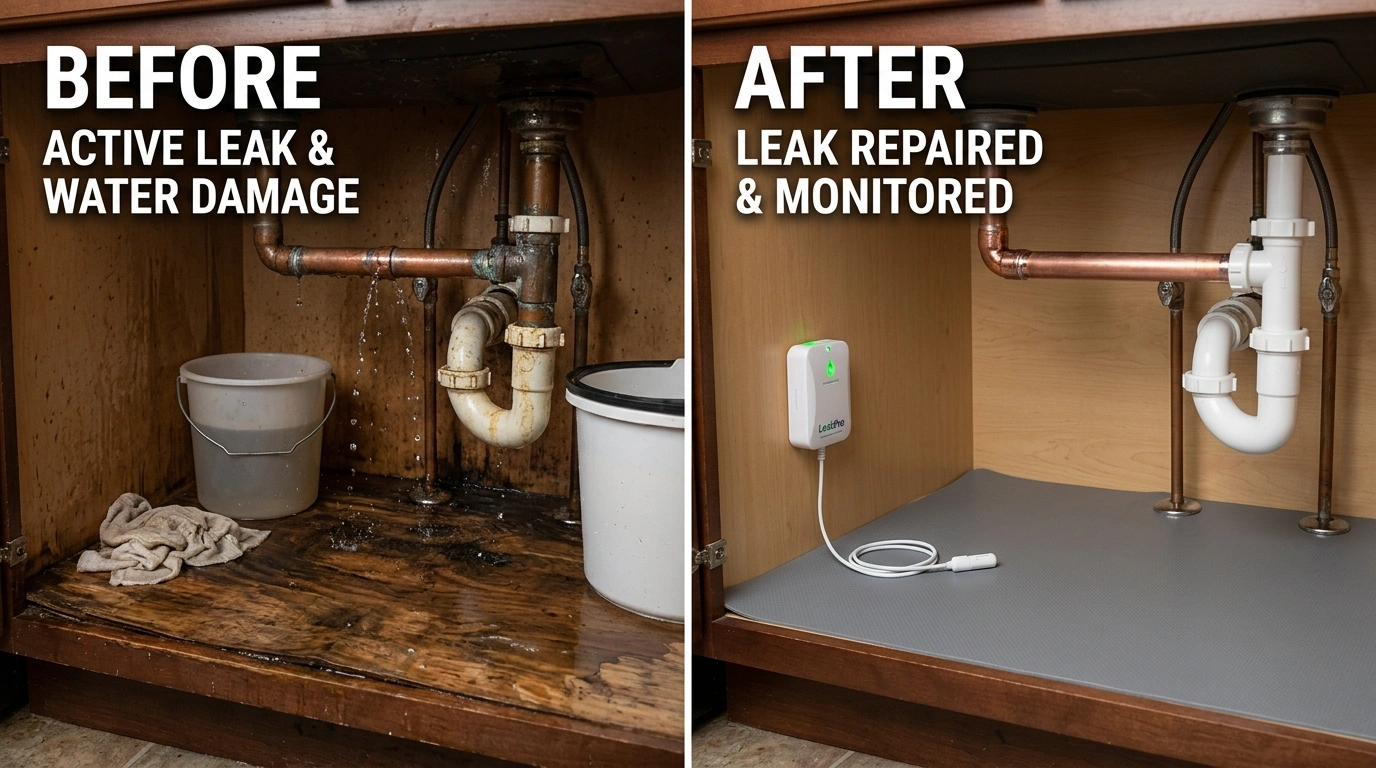
Before
A water meter continues moving when no intended water use is occurring.
After
Accessible fixtures, plumbing systems, meter behavior, and likely leak zones are assessed to guide the next step.
Before
A warm tile area or damp flooring raises concerns about a slab leak.
After
Targeted plumbing investigation helps determine whether the condition points toward a hot-water line, moisture source, or another issue.
Before
A ceiling stain appears below a bathroom, kitchen, or laundry area.
After
The likely source is investigated so plumbing repair, restoration, or specialty work can be planned appropriately.
Before
A customer fears unnecessary demolition.
After
The repair recommendation is based on findings, access conditions, pipe type, leak location, and long-term reliability considerations.
How We Locate, Repair & Replace Leaking Water Systems
Appropriate testing methods, plumbing materials, and repair practices for Temecula properties.
Should You Repair a Water Leak, Reroute the Line, or Repipe?
Helping Temecula property owners choose the most practical path after leak detection.
| Scenario | Targeted Repair May Be Recommended | Rerouting or Replacement May Be Recommended |
|---|---|---|
| Single accessible fixture/fitting leak | Yes, repair or replace affected component | Usually not needed unless other failures present |
| Isolated water-line leak behind wall/ceiling | Often, controlled access & targeted repair | Consider rerouting if access damage would be excessive |
| First confirmed slab leak on sound piping | Direct repair may be appropriate | Consider rerouting based on material & risk |
| Multiple slab leaks or recurring pinholes | Short-term spot repair may be possible | Rerouting or repiping may be more durable |
| Aging, corroded, compromised water lines | Limited repair may solve immediate issue | Broader replacement reduces repeated failures |
| Water-service-line leak (meter to building) | Localized repair may be practical | Replacement better when line is aging/damaged |
| Irrigation leak in a limited zone | Targeted irrigation repair may solve it | Larger irrigation replacement for widespread wear |
When Rerouting or Repiping May Be the Better Choice
- The property has experienced repeated slab leaks, pinhole leaks, or water-line failures
- Affected pipe is difficult to access without major concrete, flooring, cabinet, or wall disruption
- Existing lines are corroded, obsolete, damaged, or likely to continue failing
- Direct repair would address only one weak point in a broader aging plumbing system
- Property owner wants a longer-term solution with improved access to future water lines
Water Leak Detection Costs in Temecula, CA
Transparent cost drivers and clear plumbing-repair options.
Main Cost Drivers
| Service Type | Typical Pricing Consideration |
|---|---|
| Basic visible leak inspection | Depends on fixture type, access, and required repair scope |
| Water-meter or continuous-use investigation | Depends on symptoms, property systems, and needed isolation work |
| Hidden wall, floor, or ceiling leak assessment | Depends on moisture location, line access, testing methods, and repair needs |
| Slab leak detection and repair planning | Depends on plumbing layout, pipe material, access, and available repair options |
| Water-service-line or yard leak investigation | Depends on property size, exterior access, line depth, and excavation needs |
| Leak repair, rerouting, or repiping | Depends on material, length, access, restoration needs, permits, and scope |
Which Temecula Properties Should Schedule Water Leak Detection?
Understanding when unusual water use, moisture, or plumbing symptoms require professional investigation.
Water Leak Detection for Commercial & Multi-Unit Properties
Protect every water line, fixture, utility connection, and occupied space across your Temecula property.
| Commercial Service | Description |
|---|---|
| Commercial water leak investigation | Assess unexplained water use, hidden moisture, high bills, meter activity, and damage concerns |
| Water-line and fixture leak repair | Repair or replace approved valves, fittings, fixtures, supply lines, and accessible components |
| Slab leak assessment | Evaluate suspected leaks beneath commercial slabs or occupied spaces |
| Multi-unit property coordination | Schedule detection and repair for HOAs, apartments, rental portfolios, and managed buildings |
| Exterior and irrigation leak evaluation | Investigate water-service lines, irrigation zones, and outdoor plumbing concerns |
| Documentation and maintenance planning | Work records and recommendations for facilities, insurance, and future plumbing planning |
Commercial Property Types We Serve
Offices & Retail
Office buildings, retail centers, mixed-use developments, and business campuses.
Multi-Family Housing
Apartment communities, condominiums, HOAs, and managed rental properties.
Hospitality
Hotels, resorts, guest properties, wineries, tasting rooms, restaurants, and event venues.
Community Buildings
Schools, churches, recreation centers, gyms, clinics, and community facilities.
Industrial & Warehouse
Warehouses, logistics centers, industrial buildings, and manufacturing facilities.
Medical & Specialty
Medical offices, dental practices, laboratories, and properties with specialized water needs.
Benefits of Hiring Licensed Leak Detection Pros in Temecula
Protect your property, water supply, finances, and long-term plumbing system.
Identify Source Accurately
Helps identify likely leak sources before unnecessary demolition, excavation, or replacement is recommended.
Protect Building Materials
Protects floors, walls, ceilings, cabinets, insulation, landscaping from ongoing moisture exposure.
Faster Emergency Response
Supports faster response to active leaks and hidden-water-damage concerns.
Accurate Leak Classification
Distinguishes between fixture, toilet, appliance, water-heater, irrigation, service-line, slab, and drain leaks.
Clear Repair Options
Targeted repair, rerouting, water-line replacement, repiping, or exterior-line work.
Documentation Support
For homeowners, landlords, HOAs, property managers, commercial clients, and insurance discussions.
Why DIY Hidden-Leak Investigation Can Create Bigger Problems
Protect your property by avoiding unnecessary damage, unsafe access, and incorrect assumptions.
Important Safety Alert
A water meter check can be a useful first observation, but it does not identify the exact source of a leak. Cutting drywall, breaking tile, jackhammering concrete, digging in a yard, or disconnecting plumbing without a clear diagnosis can increase repair costs and create new damage.
- A moving water meter indicates possible continuous water use but does not pinpoint the leak location
- Warm floors, wet walls, and ceiling stains can have multiple causes and should not be assumed to be slab leaks
- Cutting into walls, flooring, slabs, or landscaping can damage utilities, waterproofing, wiring, pipes, and finishes
- Improperly shutting off or reconnecting water systems can create additional leaks
- Active water near electrical outlets, panels, appliances, or damaged materials can create a serious safety concern
- A hidden leak may require coordination with restoration, drywall, flooring, roofing, tile, or irrigation specialists
Answers to Common Water Leak Questions in Temecula
Quick responses to the symptoms homeowners, property managers, and commercial plumbing clients ask about most.
Why is my water meter moving when no water is running?
A moving meter can indicate water is being used somewhere on the property. Possible causes include a running toilet, leaking faucet, irrigation system, appliance connection, pool equipment, visible plumbing leak, or hidden water leak. Rancho Water recommends checking the meter after shutting off water at the home and waiting 20–30 minutes; this can help show continued water use but does not locate the source.
I received a Rancho Water leak alert. Does that mean I have a slab leak?
Not necessarily. Rancho Water leak alerts may indicate continuous water use, which can result from a plumbing leak, irrigation issue, appliance, fixture, toilet, pool system, or other ongoing water demand. The system identifies continuous usage of at least 7.5 gallons per hour over a monitored 24-hour period. A professional assessment can help identify the likely source.
What are common signs of a slab leak?
Possible slab leak warning signs include a warm spot on flooring, damp or warped flooring, unexplained high water use, persistent meter movement, lower water pressure, water-running sounds when fixtures are off, musty odors, or new moisture damage. These signs can also have other causes.
Why is there a warm spot on my tile or concrete floor?
A warm floor area can sometimes indicate a hot-water line issue beneath the slab, but it can also relate to sunlight, heating systems, appliances, floor materials, or other heat sources. If unexplained and appearing with meter movement, a higher bill, moisture, or reduced pressure, schedule professional leak assessment promptly.
Can a hidden water leak cause low water pressure?
Yes, a pressurized water-line leak can contribute to low water pressure. However, low pressure can also result from scale buildup, a partially closed valve, fixture restriction, water-heater issue, pressure regulator problem, or water-service issue. Diagnosis is needed before selecting a repair.
How do you find a water leak behind a wall?
The process may involve inspecting visible moisture patterns, checking nearby fixtures and plumbing lines, using moisture assessment tools, thermal imaging, acoustic listening equipment, pressure testing, and controlled access when necessary.
Can thermal imaging find a water leak?
Thermal imaging can help identify surface temperature differences or moisture-related patterns that may guide the investigation. It is a useful diagnostic tool but does not always prove the exact location or cause of a pipe leak by itself. It is often used together with other testing methods.
What is acoustic leak detection?
Acoustic leak detection uses specialized listening equipment to help identify sound patterns created when pressurized water escapes from a pipe. It can be useful for certain hidden or underground water-line conditions, but results depend on pipe material, depth, pressure, background noise, and access.
Will you need to break concrete to find a slab leak?
Not always. A leak investigation may use meter checks, pressure testing, acoustic listening, thermal imaging, moisture assessment, and targeted inspection to narrow the likely area first. If a repair is needed, the chosen approach may involve direct access, rerouting, repiping, or another method.
Should I repair a slab leak directly or reroute the line?
The right choice depends on pipe age, material, leak location, access, repair history, future failure risk, cost, and disruption expected. A first isolated leak may be suitable for direct repair, while repeated failures or difficult access may make rerouting or repiping more practical.
Why is my ceiling stained below a bathroom?
A ceiling stain below a bathroom may come from a shower, tub, toilet, sink, supply line, drain, valve, appliance, or another moisture source. Stop using the suspected fixture if water is actively dripping, and arrange prompt inspection.
Why is my yard wet when it has not rained?
A wet area can result from irrigation leaks, sprinkler valves, drip lines, pool equipment, outdoor plumbing, a buried water-service line, drainage conditions, shade, or another landscape issue. If the water meter moves after indoor water is shut off, an exterior system or service line may need evaluation.
Do you offer emergency water leak detection in Temecula?
Yes. Resort Temec Plumbers offers 24/7 emergency plumbing availability for active water leaks, ceiling leaks, burst lines, water damage risks, slab leak concerns, and urgent water-line issues. Same-day dispatch depends on urgency, technician availability, your location, and time of call. Call (951) 793-0002.
¿Ofrecen detección de fugas de agua en español?
Llame para confirmar la disponibilidad de atención en español. Si recibió una alerta de fuga, el medidor sigue corriendo, escucha agua con todo apagado, nota humedad en el piso o tiene una factura de agua más alta, describa el problema y la ubicación para orientar la visita.
You're Covered from Initial Leak Assessment to Long-Term Plumbing Repair Planning
Local plumbing expertise, clear findings, practical repair paths, and responsive support.
Resort Temec Plumbers is committed to providing professional water leak detection, honest plumbing evaluation, clear communication, and practical repair recommendations. We begin by understanding the symptom, assessing accessible systems, using appropriate detection methods, and explaining the likely condition before recommending major work.
If an eligible plumbing repair performed by Resort Temec Plumbers develops an issue within the applicable workmanship warranty period, contact our team so we can review the completed scope and outline the appropriate corrective options. Warranty terms, manufacturer coverage, exclusions, and eligibility vary by repair type, installed material, property condition, and written agreement.
Resort Temec Plumbers45895 Parsippany Ct
Temecula, CA 92592
United States of America
Licenses & Certifications That Support Water Leak Detection
Credentials that matter when protecting water lines, occupied properties, and plumbing systems. California's C-36 Plumbing Contractor classification covers work involving the safe supply of water and proper disposal of fluid waste.
C-36 Plumbing Contractor License
Backflow Prevention Assembly Tester
Green Plumber / Water Efficiency
OSHA 10/30 Construction Safety
ASSE 6010 Medical Gas Installer
Commercial General Liability Insured
Emergency Water Leak Detection in Temecula
Rapid response when water threatens your home, business, flooring, walls, ceilings, equipment, or operations.
Emergency Process
Immediate Phone Consultation
Assess leak location, volume of water, affected areas, and safety concerns.
Safety Guidance
Steps for shutting off a fixture or the main water supply when safe and appropriate.
Qualified Technician Dispatch
Based on urgency, technician availability, property location, and plumbing conditions.
On-Site Source Control
Leak investigation, temporary mitigation where appropriate, and repair planning.
Documentation
For property managers, restoration coordination, insurance, utilities, or maintenance records.
Emergency Scenarios
Insurance Claim Assistance for Water Leak Incidents
Documentation that may help you navigate plumbing-related water-damage claims.
When a water leak affects flooring, walls, ceilings, cabinetry, insulation, contents, landscaping, or commercial property areas, an insurance provider may request evidence about the source, observed damage, completed repairs, and recommended corrective measures.
Important Insurance Note
Insurance coverage depends on your policy language, exclusions, maintenance history, cause of loss, deductible, insurer investigation, and claim decision. Always review your policy and speak with your insurance representative for coverage guidance.
Warranty Coverage for Water Leak Detection and Plumbing Repair
Know how eligible plumbing workmanship and installed components may be protected after service.
| Coverage Type | Description |
|---|---|
| Workmanship | Warranty coverage for eligible plumbing repair and installation labor under written terms |
| Parts and components | Manufacturer coverage may apply to new valves, fittings, pipes, fixtures, and installed components |
| Leak-detection findings | Detection results are based on observable conditions and available access at the time of service |
| Documentation | Invoices, work summaries, photos, and repair records support future maintenance or warranty discussions |
Important Warranty Notes
- Warranty duration and coverage vary by repair type, installed material, manufacturer, property condition, and written agreement
- Water damage caused by unrelated leaks, drainage failure, roof intrusion, foundation movement, misuse, or work by others may not be covered
- A plumbing repair may resolve the identified leak without guaranteeing that unrelated aging lines will not develop future issues
- Customers should retain invoices, repair records, photos, meter data, and manufacturer documentation
- Ask for project-specific warranty information before approving major rerouting, repiping, water-line replacement, or slab leak repair work
10 Fully Equipped Vehicles Serving Temecula & the Inland Empire
Tools, testing equipment, plumbing materials, and trained professionals prepared for hidden water leaks.
Plumbing Diagnostic Equipment
Water-meter assessment, pressure evaluation, moisture investigation, and leak isolation tools.
Acoustic & Thermal Tools
Listening tools, thermal imaging capability, and targeted inspection resources where appropriate.
Repair Materials Onboard
Common water-line, valve, fitting, fixture, and repair materials for approved plumbing work.
Full Repair Equipment
Water-line repair, leak source control, drain service, repiping, and related plumbing tasks.
GPS-Dispatched Vehicles
Faster coordination across Temecula and surrounding Inland Empire communities.
Commercial Capability
Resources for broader commercial plumbing, emergency leak response, and water damage concerns.
Flexible Payment Options for Water Leak Repair, Rerouting & Repiping Projects
Helping Temecula property owners plan for water-line repairs, slab leak solutions, and major plumbing upgrades.
Resort Temec Plumbers can discuss available payment options for qualifying larger plumbing projects, multi-unit properties, commercial plumbing work, significant water-line repairs, slab leak solutions, and repiping needs. Financing availability, approval, rates, terms, and provider requirements must be confirmed before work begins.
Qualifying Project Options
Possible payment options for major water-line, slab leak, rerouting, and repiping projects.
Property Owner Planning
Planning support for homeowners, landlords, HOAs, property managers, and commercial clients.
Coordinated Plumbing Work
Water heaters, fixtures, drains, water treatment, irrigation, and restoration planning.
Clear Project Scope
Explanation of approved repair scope, project stages, scheduling, and payment expectations.
Recognition for Water Leak Detection and Plumbing Service Excellence
Recognition that reflects a commitment to dependable local plumbing support.
Angi Certified
Gold Award
Best of the Valley
Plumbing Company Category
PHCC Contractor of the Year
Plumbing Excellence
Quality Business Award
Verified Excellence
Top Rated Local Plumber
Community Recognition
Senior & Military Discounts on Water Leak Detection & Plumbing Repairs
Supporting seniors, active-duty service members, veterans, teachers, and qualifying Temecula customers.
Senior Discounts
Savings on qualifying leak detection and plumbing service visits.
Military & Veteran
Discounts on eligible residential plumbing work.
First-Time Customers
Offers for qualifying plumbing services.
Fixed-Price Drain Cleaning
Specials when water/moisture symptoms relate to drainage issues.
Seasonal Promotions
For broader plumbing, water-heater, water treatment, and repair projects.
Teacher Discounts
Recognizing our valued local educators.
Discount eligibility, restrictions, minimum charges, availability, and combination rules should be confirmed before scheduling service.
Water Leak Detection Hours in Temecula, CA
24/7 availability for active leaks, slab leak concerns, water-line emergencies, and urgent property-protection needs.
Weekly Schedule
| Day | Hours |
|---|---|
| Monday | 00:00 – 23:59 |
| Tuesday | 00:00 – 23:59 |
| Wednesday | 00:00 – 23:59 |
| Thursday | 00:00 – 23:59 |
| Friday | 00:00 – 23:59 |
| Saturday | 00:00 – 23:59 |
| Sunday | 00:00 – 23:59 |
Contact Resort Temec Plumbers
Resort Temec Plumbers vs. Typical Leak Detection Providers
What makes our plumbing-first water leak detection and repair approach different.
| Feature | Resort Temec Plumbers | Typical Limited-Scope Provider |
|---|---|---|
| Local service focus | Temecula, Riverside County & Inland Empire | Coverage & dispatch varies |
| Leak-assessment approach | Meter checks, isolation, pressure, moisture, acoustic, thermal | May offer single method or limited scope |
| Plumbing repair capability | Full water-line, fixture, drain, water heater, slab, rerouting, repiping | May require separate contractor |
| Emergency support | 24/7 availability for urgent leaks | May be limited to business hours |
| Repair-path guidance | Direct repair, controlled access, rerouting, repiping, exterior-line work | May provide location data only |
| Documentation | Work summaries, invoices, plumbing recommendations | Documentation practices vary |
Contact Resort Temec Plumbers for Water Leak Detection in Temecula, CA
Talk directly with a plumbing professional about hidden water leaks, slab leaks, high bills, meter activity, damp floors, ceiling stains, yard leaks, or urgent repair needs.
Contact Details
Temecula, CA 92592
Riverside County, Inland Empire
Hours of Operation
Request an Online Leak Detection Estimate
Submit your service request below for prompt confirmation.
Protect your home, business, water lines, floors, walls, ceilings, landscaping, and budget with professional Water Leak Detection Temecula CA service from Resort Temec Plumbers.